

A standardized chart of accounts ensures that transactions are recorded in the correct categories. It reduces the likelihood of misclassification errors and helps maintain uniformity in reporting. They Oil And Gas Accounting are policies and procedures that ensure the accuracy and integrity of financial records by reducing opportunities for mistakes and fraud. Create a new journal entry to reverse the incorrect entry or adjust it to reflect the correct transaction.
- For auditors, errors are a red flag that may indicate deeper issues within the company’s financial practices, prompting more rigorous examinations and recommendations.
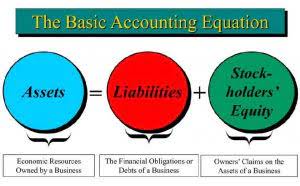
- Accounting statements clearly understand a business’s financial position, which refers to its overall financial status, including its assets, liabilities, and equity.
- These entries should be clearly documented and supported by a detailed explanation of the error and the reason for the adjustments.
- From the perspective of management, the discovery of errors can be a call to action to strengthen internal controls and review processes to prevent future occurrences.
Financial Consulting for Startups: 6 Proven Ways to Maximize Profits in 2025
- A change in accounting policy is accounted for through retrospective application, meaning the new policy is applied as if it had always been in use.
- Prior Period Errors must be corrected Retrospectively in the financial statements.
- Detecting errors in financial statements is a critical and intricate process that involves a meticulous examination of the accounts to ensure their accuracy and compliance with accounting standards.
- In essence, the financial statements of prior periods are redone to reflect the correct amounts.
- This arises when a transaction is recorded in the wrong class of account without due regards to the fundamental accounting principle.
- These changes influence how financial information is recorded, analyzed, and disclosed, making it essential for organizations to apply them correctly.
This method of showing tax effects for discontinued operations is mandatory and is called intraperiod tax allocation. A company may only change an accounting policy if a new IFRS standard requires https://www.masde3millones.com/franchise-tax-board-ftb-ca-gov/ it, or if the change voluntarily results in more reliable and relevant information. This applies to information about the company’s financial position, performance, or cash flows. Timing errors occur when a transaction is recorded in the wrong accounting period.
IFRS vs. U.S. GAAP
- Adjustments for deferred tax liabilities or assets involve understanding relevant tax codes, such as IRC Section 482, which addresses the allocation of income and deductions among related parties.
- Why not just catch up by “double depreciating” the asset in 20X5, and then everything will be fine, right?
- Reconciliation of accounts is a common practice that can reveal differences needing investigation.
- Accurate financial data is crucial during the annual tax season, as it helps you avoid late filing fees, complex amendment returns, and legal repercussions.
- Make it a habit to review your trial balance at the end of each accounting period.
- However, the first checkbox is not required to be checked for any out-of-period adjustments that are recorded in the financial statements of the current period.
Detecting errors is not just about compliance; it’s about ensuring the financial narrative of the company accurately reflects its economic activities and positions. From a management’s point of view, detecting errors is essential for presenting a true and fair view of the accounting errors must be corrected: company’s financial position. Management must establish robust internal control systems and regularly review financial statements for potential errors. This example simplifies a complex process, but it gives an idea of how a company might correct a prior period error in its financial statements.

Accounting Errors: Correcting the Past: Accounting Errors and Prior Period Adjustments
Disclosures that must accompany a change in accounting principle are extensive. In addition, a substantial presentation is required showing amounts that were previously presented versus the newly derived numbers, with a clear delineation of all changes. And, the cumulative effect of the change that relates to all years prior to the earliest financial data presented must be disclosed.
- Likewise, if information is misinterpreted or old data is used when more current information is available in developing an estimate, an error exists, not a change in estimate.
- In financial statements which reflect both error corrections and reclassifications, clear and transparent disclosure about the nature of each should be included.
- This foundation not only ensures compliance and operational efficiency but also builds the confidence necessary for making sound strategic decisions.
- 2 However, plans to file a registration statement that incorporates previously filed financial statements before the prior periods are revised may impact this approach.
- This means establishing the correct debit and credit accounts and the right amounts.
Companies must adhere to filing requirements, such as submitting amended reports like Form 10-K/A or Form 10-Q/A, to reflect corrected financial information. These filings should include explanations of the errors, affected periods, and the impact on financial metrics. Maintaining open communication with regulators facilitates the review process and demonstrates a proactive approach to compliance, reducing the risk of penalties. Identifying prior year errors requires a meticulous review of historical financial data, including ledgers, journal entries, and financial statements. Auditors and analysts use analytical procedures to detect anomalies, such as unexpected fluctuations in gross profit margins or inconsistencies in cash flow statements. Explore the nuances of managing accounting changes and error corrections, focusing on their impact on financial statements and disclosure practices.